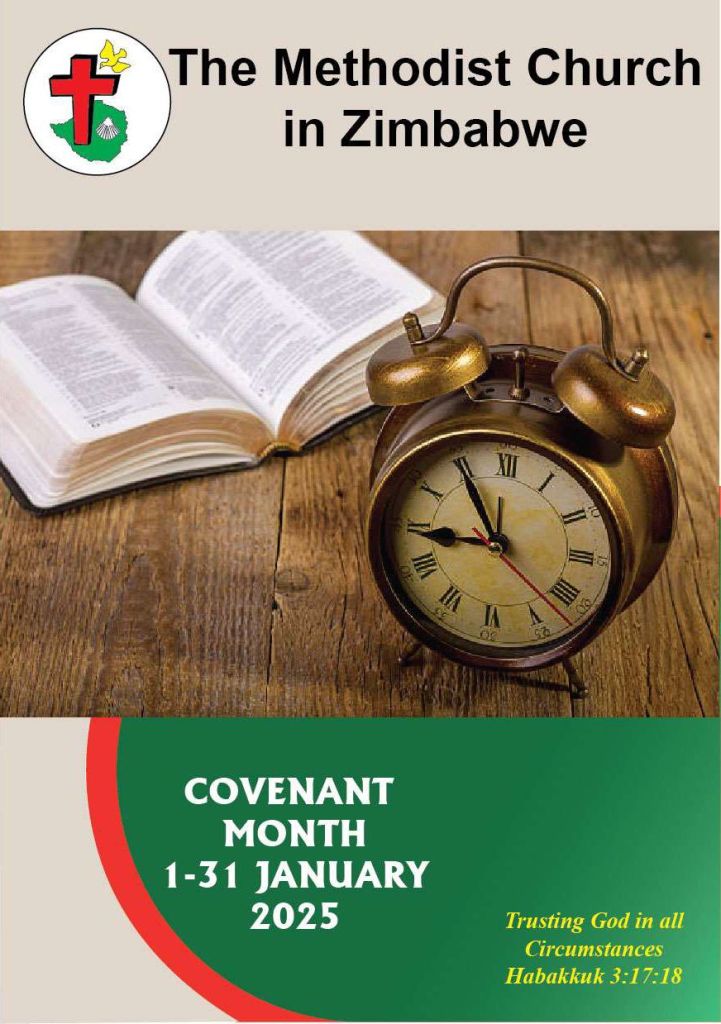
THEME: TRUSTING GOD IN ALL CIRCUMSTANCES
(Habakkuk 3:17-18)
[See also: The Covenant Service.]
Click or tap on the day number of your choice to jump down the page to the notes for that day:
Foreword
We sing on one of our hymnals that, ‘Like a mighty army, moves the Church of God’. Indeed we are marching forward. We thank God who has called, commissioned and positioned us as His ambassadors in 2024. We have the conviction that we did represent Him so well in all aspects of life in the land of the living. As we continue to represent Him, we cannot dismiss the truth that life in this world which is not ours is comprised of different episodes, i.e. episodes of both joys and sorrows. We have seen this in 2024. The year itself could be described as a mixed bag of assorted biscuits. Sweet and bitter memories can still be heard echoing in our ears and minds. The world in which we represented Christ in as His ambassadors was seen sometimes being hostile to us in many ways. For example, families, church and the nation at large were negatively affected economically. Even the socio-political landscape was not all that conducive and peaceful. Fear was, and continues to be the order of the day.
However, in the face and midst of such episodes we are always encouraged by the message of the author of the first book of Kings that, “The God of the mountain is still the God of the valley” (1 Kings 20: 23-27). He is with us always, hence we trust Him in all circumstances.
Brethren, it is that time of the year that we come together as Methodist family asking God to lay down the foundation of how the year will be like. We do so in the word of the psalmist that, ‘If the Lord does not build the house the builders work in vain …” (Psalm 127: 1-2). In this understanding it is equally true that those who start the year without the Lord do so in vain. In this, the period in which we are in is that which we ask God to start the year with us, and at the same time express our willingness to enter into covenants with Him, hence this month known in the Methodist tradition as the ‘Covenant Month’. In it we make a reflection of where we came from, where we are, and where we are going and make that as the basis for the renewal of the previous covenants as well as entering into new covenants with God.
Guided by our theme for the year, ‘Trusting God in all circumstances’ (Habakkuk 3: 17-18), this book has been carefully prepared to help us as people called Methodists to reflect and meditate as we make our declarations that there is no other name in heaven and on earth that is worth worshipping. Our loyalty to God is not based on material things, but on who God is to us, hence, ‘Though the fig tree does not bud and there are no grapes on the vines; though the olive crop fails and the fields produce no food; though there are no sheep in the pen and no cattle in the stalls, we will rejoice in the Lord …’ (Habakkuk 3: 17-18). May we have a fruitful Covenant Month.
Revd. Dr. K. Paradza (Mission Director)
Acknowledgements
This publication of the ‘Covenant Month’ booklet was prepared by Revds, Tapiwa Mleya, Gladman Chauya, Elias M. Mtemeri and Siphatisiwe Fuyani. We continue to thank these colleagues in the vineyard for their commitment and sacrifices. Our profound gratitude goes to our Local Languages Committees for always making sure that this treasure is made available to us in the languages of the local people. We continue to thank our Connexional Bookshop for always making sure that the book is accessible to all Methodists, both locally and abroad, either in soft or hard copy formats.
May God bless people called Methodists.
Revd. O. Chagudhuma (Research and Publications Coordinator)
DAY 1
THEME: Theme Reflection: Trusting God in All Circumstances
READING: Habakkuk 3:17-18
The book of Habakkuk presents a profound dialogue between the prophet and God, grappling with the age-old question of why evil and suffering seem to prevail in the world. In the midst of this challenging exchange, Habakkuk 3:17-18 offers a remarkable testament to the power of unwavering faith and trust in the Lord, even in the face of the direst circumstances.
In these verses, the prophet paints a vivid picture of a landscape ravaged by drought and economic ruin. The fig tree does not blossom, the vines yield no fruit, the olive crop fails, and the fields produce no food. The flock is cut off from the fold, and there are no cattle in the stalls. By all outward appearances, this is a scene of utter desolation and hopelessness.
Yet, in the midst of this scenario, Habakkuk declares, “Yet I will rejoice in the Lord; I will take joy in the God of my salvation” (Habakkuk 3:18). This remarkable statement of faith underscores the core message of the passage: that true trust in God transcends the circumstances we face, no matter how dire they may be.
The prophet’s words remind us that our ultimate security and joy should not be found in the fleeting and fragile comforts of this world, but rather in the steadfast and unfailing love of the Almighty. When everything around us seems to crumble, when our resources and provisions are stripped away, we are called to cling to the truth that God is our “God of salvation,” the one who is sovereign, faithful, and good, even in the darkest of times. This kind of unwavering trust is not easy to cultivate, for it requires a deep and abiding relationship with the Lord, one that has been forged through seasons of trials and testings. But as Habakkuk’s example shows us, when we choose to rejoice in the Lord and find our joy in Him alone, we discover a wellspring of strength, hope, and peace that cannot be shaken by the changing tides of life.
In a world that so often seeks to define our worth and security by our material possessions or earthly achievements, Habakkuk 3:17-18 stands as a powerful reminder that true and lasting fulfilment can only be found in the steadfast love of our God. As we reflect on this passage in this covenant month, may it inspire all Methodists to deepen their trust in the Lord, to cling to Him as their sole source of salvation, and to rejoice in His unwavering faithfulness, no matter what circumstances we may face.
DAY 2
THEME: Be Strong and Courageous in Trusting God
READING: Joshua 1: 5-9
Introduction
The book of Joshua recounts the Israelites’ dramatic transition from wandering in the wilderness to entering and conquering the Promised Land.
As the people prepare to face the challenges that lie ahead, God issues a powerful charge to their new leader, Joshua, urging him to “be strong and courageous” (Joshua 1:6). This exhortation holds profound significance when understood in light of our main theme of trusting God in all circumstances.
The Call to Be Strong and Courageous (Joshua 1: 5-6)
In Joshua 1:5-6, God makes a series of remarkable promises to Joshua, saying, “No man shall be able to stand before you all the days of your life. Just as I was with Moses, so I will be with you. I will not leave you or forsake you. Be strong and courageous, for you shall cause these people to inherit the land that I swore to their fathers to give them.” These words underscore the fact that Joshua’s strength and courage are not to be rooted in his own abilities, but in the steadfast presence and power of the Almighty.
Trusting God in the Face of Overwhelming Odds
As the Israelites prepare to confront the formidable inhabitants of Canaan, the call to be strong and courageous takes on added significance. Humanly speaking, the odds of success seem bleak, yet God’s promise to be with Joshua and to give the people the land serves as a powerful reminder to trust in the Lord’s faithfulness, rather than in the circumstances.
The Key to Strength and Courage: Meditating on God’s Word (Joshua 1: 7-9)
In Joshua 1:7-9, God further instructs Joshua on the key to finding the strength and courage he will need: meditating on the law, or the Word of God. By keeping this law constantly before him, Joshua will be able to “turn not from it to the right hand or to the left,” ensuring that he and the people remain firmly grounded in God’s will and guidance.
Conclusion
The lesson we can take from this passage is that true strength and courage in the face of life’s challenges comes not from our own abilities, but from an unwavering trust in the promises and presence of God. As we meditate on His Word and allow it to shape our thoughts and actions, we too can find the fortitude to face even the most daunting of circumstances, knowing that the Lord is with us and will not abandon us. May this passage inspire us to be strong and courageous in our faith, trusting in God’s unfailing love and sovereign plan for our lives.
DAY 3
THEME: Trusting God in Mountain Highs and Valley Lows
READING: Mark 9:2-29
Introduction
As we continue with our lessons, it is important to note that the Christian life is often marked by dramatic peaks and valleys, moments of profound spiritual exhilaration followed by deep valleys of struggle and doubt. This pattern is vividly illustrated in the passage from Mark 9: 2-29, which describes Jesus’ transfiguration on the mountain, followed by His disciples’ inability to cast out a demon from a boy. As we examine this passage in light of our theme of trusting God in all circumstances, we find an important lesson on maintaining our faith through life’s ups and downs.
The Mountaintop Experience (Mark 9: 2-8)
In the first part of this passage, Jesus takes Peter, James, and John up a high mountain, where He is transfigured before them, His clothes becoming dazzlingly white and His appearance transformed. This awe-inspiring vision of Jesus’ divine glory serves as a powerful reminder of who He truly is – the Son of God, the Messiah. For the disciples, this must have been a profound and faith-affirming experience, a mountain-top moment that solidified their belief in Jesus’ identity and mission.
The Valley of Doubt and Struggle (Mark 9: 14-29)
However, as the passage continues, we see the disciples plunged into a very different scenario. Returning from the mountain, they find themselves unable to cast out a demon from a boy, leading to a tense exchange with the scribes and a desperate plea from the boy’s father for help. This valley of struggle and doubt stands in stark contrast to the mountain-top experience, revealing the disciples’ weakness and lack of faith.
Trusting God in the Highs and Lows
The lesson we can draw from this passage is that trusting God in all circumstances means maintaining our faith not only in the mountain-top experiences, but also in the valley lows. Just as the disciples needed to rely on the power and authority of Christ to cast out the demon, we too must learn to trust in God’s faithfulness and strength, even when our circumstances seem bleak and our own resources feel inadequate.
Jesus’ response to the father’s plea, “All things are possible for one who believes” (Mark 9: 23), serves as a powerful reminder that our trust in God is not contingent on the ups and downs of our spiritual lives, but on the unchanging reality of His love, grace, and power. When we find ourselves in the valleys, we must cling to the truth that God’s love and presence remain steadfast, and that He is able to work powerfully in and through us, even in our weakness.
Conclusion
The passage from Mark 9 challenges us to maintain our trust in God, not just when we are experiencing the spiritual highs, but also when we find ourselves in the valleys of doubt, struggle, and despair. By keeping our eyes fixed on Jesus, the author and perfecter of our faith, we can find the strength to persevere, knowing that His power and grace are sufficient for us in all circumstances. May this lesson inspire us to trust in God, no matter the ups and downs we face in our spiritual journeys.
DAY 4
THEME: The Deadly Danger of Disbelief in Trusting God
READING: Mark 6:1-6
Introduction:
In the Gospels, we often encounter examples of people who struggled to trust in God and His power, despite the overwhelming evidence of His divine nature and working. The passage from Mark 6:1-6 provides an illustration of this deadly danger of disbelief, as Jesus encounters resistance and skepticism from the very people who should have been most receptive to His teachings – the people of His hometown. As we examine this passage, we are reminded of the critical importance of maintaining an unwavering faith, even in the face of doubt and opposition.
The Hometown Scepticism (Mark 6:1-3)
In this passage, we see Jesus returning to His hometown of Nazareth, where He begins to teach in the synagogue. However, instead of the people receiving His message with open hearts and minds, they are filled with skepticism and resistance. “Where did this man get these things?” they ask, questioning the source of His wisdom and the validity of His teachings. Their familiarity with Jesus as the “carpenter” and the son of Mary leads them to doubt His divine calling and authority, ultimately preventing them from recognizing the true nature of His ministry.
The Consequences of Disbelief (Mark 6:4-6)
Jesus’ response to the people’s disbelief is both insightful and sobering. He declares, “A prophet is not without honor, except in his hometown and among his relatives and in his own household” (Mark 6:4). This statement highlights the tragic reality that those closest to us can sometimes be the most resistant to trusting in God’s work, particularly when it goes against their preconceived notions or challenges their comfort zones.
The passage then goes on to note that Jesus “marvelled because of their unbelief” and was “unable to do many mighty works there” (Mark 6:5-6). This underscores the devastating consequences of disbelief, as it not only hinders our ability to receive God’s blessings and provision, but it also limits the effectiveness of His work in our lives and in the lives of those around us.
Trusting God in the Face of Scepticism
The lesson we can draw from this passage is that maintaining a steadfast trust in God is critical, even (and perhaps especially) when we face opposition, scepticism, or doubt from those closest to us. When we allow our faith to be shaken by the disbelief of others, we risk missing out on the transformative power and work of God in our lives. Instead, we must choose to cling to the truth of God’s character and the reality of His love, grace, and sovereignty, even when our circumstances or the responses of others seem to contradict this. By doing so, we not only position ourselves to receive the fullness of God’s blessings, but we also witness to the power of a faith that is rooted in something greater than the shifting sands of human opinion.
Conclusion
The passage from Mark 6 serves as a sobering reminder of the deadly danger of disbelief, and the critical importance of maintaining an unwavering trust in God, even in the face of skepticism and opposition. As we navigate the challenges and uncertainties of life, may we be inspired to keep our eyes fixed on the unfailing love and steadfast promises of our Heavenly Father, allowing our faith to grow stronger and our trust in Him to deepen, no matter the circumstances we encounter.
DAY 5
TOPIC: Trusting God When We Are Confused and Overwhelmed
READING: Mark 4:35-41
Introduction
In the midst of life’s storms, it can be easy to feel confused, overwhelmed, and disconnected from God. The passage from Mark 4:35-41 provides a powerful illustration of this experience, as the disciples find themselves caught in a fierce tempest on the Sea of Galilee, while Jesus appears to be sleeping. As we examine this passage in light of the overarching theme of trusting God in all circumstances, we are reminded of the importance of clinging to our faith, even when our circumstances seem to suggest that God is absent or disengaged.
The Raging Storm (Mark 4:35-38)
The passage begins with Jesus instructing the disciples to cross over to the other side of the Sea of Galilee. As they set out, a great windstorm arises, causing the waves to crash violently against their boat. In the midst of this terrifying ordeal, the disciples find Jesus sleeping peacefully, leading them to cry out in desperation, “Teacher, do you not care that we are perishing?” (Mark 4:38).
The Calming of the Storm (Mark 4:39-41)
Jesus’ response to the disciples’ plea is both powerful and profound. He simply stands up, rebukes the wind, and commands the sea to “Be still!” (Mark 4:39). Immediately, the storm subsides, and a great calm settles over the water. This miraculous display of Jesus’ authority over the forces of nature serves as a powerful reminder of His divine power and sovereignty.
Trusting God in the Midst of Confusion and Overwhelming
The key lesson we can draw from this passage is that even when we find ourselves in the midst of life’s storms, confused and overwhelmed by the circumstances we face, God remains present and in control. Just as Jesus was with the disciples in the boat, so too is He with us, even when it may seem like He is sleeping or disengaged. The disciples’ initial reaction of fear and desperation is understandable, but Jesus’ rebuke of their “fear” and “little faith” (Mark 4:40) challenges us to maintain our trust in Him, even when our circumstances seem to contradict His care and concern for us. By keeping our eyes fixed on the truth of God’s power, love, and sovereignty, we can find the courage and strength to weather any storm, knowing that He is always present and working for our good.
Conclusion
The passage from Mark 4 serves as a powerful reminder that even in the midst of our confusion and overwhelm, God is still at work, and His love and care for us never wavers. As we navigate the storms of life, may we be inspired to cling to our faith in Him, trusting that He is in control and that He will guide us safely through, no matter the circumstances we face.
DAY 6
TOPIC: Trusting God When the Walls Come Down
READING: Joshua 6:17-27
Introduction
In the book of Joshua, we encounter a pivotal moment in the Israelites’ journey to the Promised Land – the miraculous fall of the walls of Jericho. This event, described in Joshua 6:17-27, serves as a powerful illustration of the importance of trusting God, even when the circumstances we face seem impossible or daunting. As we explore this passage in light of the overarching theme of trusting God in all circumstances, we are reminded of the transformative power that comes from placing our faith in the Almighty.
The Fall of Jericho (Joshua 6:17-21)
The Israelites, led by Joshua, have arrived at the formidable city of Jericho, which stands as a significant obstacle in their path to the Promised Land. God instructs them to march around the city for seven days, and on the seventh day, to shout and blow their trumpets. This seemingly unconventional strategy leaves the Israelites, and even the reader, wondering how such a simple plan could possibly result in the city’s downfall. Yet, when the Israelites obediently follow God’s instructions, the walls of Jericho suddenly collapsed, allowing the Israelites to swiftly conquer the city. This miraculous event serves as a powerful demonstration of God’s sovereign power and the importance of trusting in His plan, even when it defies human logic and understanding.
Rahab’s Preservation (Joshua 6:22-25)
Amidst the chaos of Jericho’s destruction, the passage also highlights the story of Rahab, a Canaanite woman who had previously sheltered the Israelite spies. Despite the city’s impending doom, Rahab and her family are spared, a testament to the faithfulness of God and the rewards that come from trusting in Him, even in the face of great risk and adversity.
Trusting God When the Walls Come Down
The lesson we can draw from this passage is that God’s power and sovereignty are not limited by the perceived strength of our circumstances or the seemingly insurmountable obstacles we face. Just as the Israelites trusted in God’s plan for Jericho, even when it seemed foolish or impossible, so too are we called to trust in Him, even when the “walls” of our own lives seem poised to come crashing down. Whether we are confronted with personal struggles, societal challenges, or spiritual battles, the story of Jericho reminds us that God is always in control and that our unwavering faith in Him can open the door to miraculous and unexpected outcomes. By keeping our eyes fixed on the truth of His love, grace, and power, we can find the courage and strength to face any circumstance, knowing that He is working all things together for our good.
Conclusion
The passage from Joshua 6 serves as a powerful testimony to the transformative power of trusting God in all circumstances. As we navigate the ups and downs of life, may we be inspired to follow the example of the Israelites, placing our faith in the Almighty and allowing Him to work mightily in our lives, even when the “walls” of our challenges seem poised to come crashing down.
DAY 7
TOPIC: Casting Your Cares on the Lord
READING: Psalm 55: 22
Introduction
In the midst of life’s trials and tribulations, it can be all too easy to become overwhelmed by the burdens we carry. The psalmist in Psalm 55: 1 captures this sentiment, crying out, “Give ear to my prayer, O God, and hide not yourself from my plea for mercy!” This passage, when considered within the broader context of the main theme of trusting God in all circumstances, provides a powerful reminder of the importance of casting our cares and anxieties upon the Lord.
The Psalmist’s Distress (Psalm 55: 1-8)
The opening verses of Psalm 55 paint a vivid picture of the psalmist’s inner turmoil. He is beset by anguish, terrors, and fears, and his heart is in anguish within him. The psalmist feels as though he is being pursued by his enemies, and he longs for the peace and security that he once knew. In the midst of this distress, the psalmist cries out to God, pleading for mercy and for God to “hide not yourself” from his plea (Psalm 55: 2). This desperate cry for help reflects the human experience of feeling overwhelmed and disconnected from the divine, even as the psalmist struggles to maintain his faith.
Casting Your Cares on the Lord (Psalm 55: 22)
The key verse that speaks to the sub-theme of this lesson is Psalm 55: 22, which states, “Cast your burden on the Lord, and he will sustain you; he will never permit the righteous to be moved.” This powerful exhortation reminds us that in the midst of our struggles and worries, we are not meant to bear the burden alone. Rather, we are called to cast our cares and anxieties upon the Lord, trusting that He will sustain us and provide the strength and support we need. When we choose to surrender our burdens to God, we acknowledge our own limitations and our need for His divine intervention. By doing so, we open ourselves up to the transformative power of His grace, which can lift us out of our despair and renew our hope and faith.
Trusting God in All Circumstances
The lesson we can draw from this passage is that even in the midst of our deepest trials and tribulations, we can find solace and strength in trusting God. When we cast our cares upon Him, we are acknowledging His sovereignty, His love, and His ability to carry us through any circumstance. This does not mean that our struggles will instantly disappear or that our pain will be immediately alleviated. Rather, it means that we can rest in the knowledge that God is with us, working all things together for our good, even when we cannot see the path ahead.
Conclusion
The psalmist’s words in Psalm 55 serve as a powerful reminder that we need not face the challenges of life alone. By casting our cares upon the Lord, we can find the courage and strength to trust in Him, even when the burdens we carry seem too heavy to bear. As we navigate the ups and downs of our lives, may we be inspired to cling to this truth and to surrender our anxieties to the One who is always there to sustain us.
DAY 8
TOPIC: Trusting in God, even when it seems to make no sense
READING: Proverbs 3: 5-6
Ladies and gentlemen, brothers and sisters in Christ, today our focus shall be on the powerful message from the book of Proverbs, chapter 3, verses 5 and 6. These verses hold a profound truth that has the potential to transform our lives and ignite a fire of unwavering trust in our hearts, even when it seems to make no sense.
Proverbs 3: 5-6 reads, “Trust in the LORD with all your heart and lean not on your own understanding; in all your ways submit to him, and he will make your paths straight.” These words are not merely a poetic expression or a religious platitude. They contain a divine invitation to embrace a radical, audacious trust in God, a trust that surpasses our human comprehension.
In a world driven by logic, reason, and self-reliance, this command to trust in the Lord with all our hearts may appear foolish and counter intuitive. We are conditioned to seek certainty, to rely on our own understanding, to meticulously plan and control every aspect of our lives. But the wisdom of God often transcends human wisdom, and His ways are higher than our ways.
God calls us to surrender our limited understanding and place our trust in Him whole heartedly. He invites us to step into the realm of faith, where His power is made perfect in our weakness. It is in those moments when our human understanding fails, when circumstances seem bleak and confusing, that God’s sovereignty shines the brightest. He can work miracles when we trust Him without reservation, even when it seems to make no sense.
Consider the story of Abraham. God called him to leave his homeland and go to a land that He would show him. Abraham had no roadmap, no GPS, and no logical reason to embark on such a journey. But he chose to trust God, even though it made no sense. And as a result, he became the father of many nations, and through his descendants, the Messiah entered the world.
Or think about Moses, standing before the Red Sea with the Egyptian army closing in. The situation seemed hopeless and illogical. But when Moses trusted in God, against all odds, the sea parted, and the Israelites walked through it on dry ground.
In the New Testament, we find the story of Peter, a simple fisherman, who was called to step out of the boat and walk on water toward Jesus. It defied all logic and natural law, but Peter trusted Jesus and experienced the miraculous until his doubt set in.
These examples remind us that when we trust God even when it makes no sense, we position ourselves for the extraordinary. Our lives become testimonies of His faithfulness, and we inspire others to do the same. Trusting God in the face of uncertainty requires courage, humility, and a willingness to let go of our own plans. It means acknowledging that His understanding surpasses ours and His ways are perfect, even if they don’t align with our human logic. It means surrendering our desires and submitting to His will, trusting that He will make our paths straight.
So, brothers and sisters, let us rally together as the church, embracing a radical trust in God. Let us encourage one another to lay aside our doubts and fears. Let us choose to trust Him with unwavering faith, even when our circumstances seem impossible. For it is in those moments that God’s power is unleashed, His glory is revealed, and His purposes are fulfilled. May the words of Proverbs 3: 5-6 become the anthem of our lives, resounding through our hearts and minds, propelling us forward in unwavering trust:
“Trust in the LORD with all your heart and lean not on your own understanding; in all your ways submit to him, and he will make your paths straight.”
May God bless you abundantly as you step out in faith and trust Him, even when it makes no sense. Amen.
DAY 9
TOPIC: Righteous shall live by faith
READING: Habakkuk 2: 4
Ladies and gentlemen, brothers and sisters, today I want to draw your attention to the book of Habakkuk in the Old Testament, specifically Chapter 2, which provides us with valuable insights on trusting God in times of uncertainty. In this particular passage, the prophet Habakkuk finds himself in a state of perplexity and uncertainty. He is burdened by the prevailing injustice and violence in his society, and he cries out to God, seeking answers and understanding. In response to his plea, God instructs Habakkuk to write down a vision and make it plain so that those who read it may run with it.
This divine instruction holds a profound lesson for us today. When we encounter uncertainty and challenges in our lives, it is crucial to seek God’s wisdom and guidance. God’s response to Habakkuk teaches us that even in the midst of confusion, we should trust in His sovereignty and faithfulness.
Trusting God in times of uncertainty requires us to have faith that He is in control, even when circumstances seem dire. In verse 4 of Habakkuk 2, God assures the prophet, “the righteous shall live by his faith.” This statement emphasizes the importance of maintaining our faith in God’s promises, even when we cannot fully comprehend His ways.
In our own lives, we face various forms of uncertainty. It could be financial difficulties, health challenges, relationship struggles, or unexpected changes that throw us off balance. However, just as Habakkuk trusted in God’s plan, we too can place our trust in Him.
Trusting in God does not mean that we will be exempt from trials or that we will always understand His ways. Rather, it means that we believe God is working in and through our circumstances, even when we don’t see immediate answers. As the Apostle Paul writes in Romans 8: 28, “And we know that for those who love God all things work together for good, for those who are called according to his purpose.”
Trusting God in times of uncertainty also involves seeking His guidance through prayer and studying His Word. Habakkuk demonstrated this by waiting on God and listening for His response. In the same way, we should make time to communicate with God, pouring out our hearts to Him and seeking His wisdom and direction.
Furthermore, as we trust God, we must also remember that His timing is perfect. Habakkuk had to wait patiently for God’s plan to unfold, and we may need to do the same. Sometimes, God’s answers and solutions come in ways we least expect, but they are always in accordance with His perfect will.
In closing, the book of Habakkuk serves as a powerful reminder that trusting God in times of uncertainty is not only possible but also necessary. When we encounter challenges and confusion, let us emulate Habakkuk’s faith and seek God’s wisdom, knowing that He is in control and that His plans are ultimately for our good. May we find strength and courage in trusting God, even when we cannot see clearly the road ahead?
Day 10
TOPIC: The Sovereign God Who Reigns Supreme
READING: Psalm 115: 3-8
Introduction
We live in a world that often seems chaotic and out of control. Natural disasters, political turmoil, and personal struggles – it can feel like nothing is certain.
But in the midst of this uncertainty, the psalmist in Psalm 115 declares a powerful truth: our God is sovereign and in complete control.
God’s Sovereignty Contrasted with Idols (v.3-4)
“Our God is in the heavens; he does all that he pleases.” (v.3) God is not limited or restrained – He does whatever He decides. He is all-powerful and all-controlling.
In contrast, the “idols of the nations are silver and gold, the work of human hands.” (v.4)
Idols, whether physical or ideological, have no real power. They are created by finite, fallible humans.
Idols are Powerless (v.5-7)
The psalmist goes on to describe the utter impotence of idols – “They have mouths, but do not speak; they have eyes, but do not see. They have ears, but do not hear, nor is there any breath in their mouths.” vv.5-6)
Idols cannot act, think, hear, or respond. They are completely lifeless and unable to do anything.
Those who trust in such powerless things “become like them.” (v.7) -equally important and without true life.
God Alone is Sovereign (v.3)
In stark contrast to the worthless idols, “our God is in the heavens; he does all that he pleases.” (v.3)
The one true God is all-powerful, all-knowing, and all-controlling. Nothing is outside of His authority and will.
Unlike the idols, God sees, hears, and acts according to His perfect purposes. He is the living, sovereign Creator.
Application:
In a world that feels increasingly uncertain, we can find great comfort, security, and peace in the sovereign control of our God.
When we recognize that God is truly in charge, we can entrust our lives fully to Him, knowing that He will work all things together for our good.
Let us reject the empty, powerless “idols” of our age and instead worship the one true God who reigns supreme over all creation.
Conclusion:
The God we serve is not a distant, detached deity, but a sovereign, all-powerful Lord who actively works in the world.
May this truth embolden us to trust in Him completely, no matter what circumstances we face. For our God reigns, and He does all that He pleases.
DAY 11
TOPIC: Finding Refuge in God
READING: Psalm 46:1
Message:
Psalm 46:1 declares, “God is our refuge and strength, an ever-present help in trouble.” This verse reminds us that God is our safe haven, our rock, and our savior. In a world filled with uncertainty and chaos, we can find peace and comfort in God’s presence.
Application:
1 Identify Your Refuge: Recognize that God is your ultimate refuge, not people, possessions, or places.
2 Seek God’s Presence: In times of trouble, turn to God in prayer, meditation, and reading His Word.
3 Trust God’s Sovereignty: Believe that God is in control, even when circumstances seem chaotic.
4 Find Strength in God: Draw on God’s power and wisdom to face your challenges.
5 Share Your Refuge: Point others to God as their refuge and strength, sharing the hope and peace you’ve found in Him.
Questions for Reflection:
What are some areas in your life where you need to seek God as your refuge?
How can you practically trust God’s sovereignty in difficult situations?
Who can you share God’s refuge with this week?
DAY 12
TOPIC: “When the Figs Wither”
Reading: Habakkuk 3: 17
“Though the fig tree does not bud and there are no grapes on the vines, though the olive crop fails and the fields produce no food…”
The Reality of Adversity
Habakkuk’s honest acknowledgment of the material losses and hardships he was facing (Habakkuk 3:17). It is also fact that we will all encounter seasons of adversity, loss, and hardship in our lives. How it’s easy to focus solely on our circumstances and lose hope? We often led by the natural human inclination to become discouraged when things don’t go as planned.
Habakkuk’s decision to maintain his faith in God despite the difficult conditions (Habakkuk 3:18) clearly shows the importance of choosing to trust in God’s goodness and sovereignty, even when life doesn’t make sense. Habakkuk’s declaration to “rejoice in the Lord” and be “joyful in God my Savior” (Habakkuk 3:18) There is distinction between happiness, which is circumstantial, and joy, which is rooted in our relationship with God. Habakkuk`s affirmation that the “Sovereign Lord is my strength” it’s a true testimony that God can supernaturally empower us and enable us to overcome adversity.
Application:
Reflect on your own challenges and take time to honestly assess the areas of adversity, loss, or hardship you are currently facing in your life.
Acknowledge the reality of your difficult circumstances, but don’t allow them to consume you.
Choose to Trust in God’s Sovereignty
Make a deliberate decision, like Habakkuk, to maintain your faith in God’s goodness and control, even when life doesn’t make sense. Remind yourself that the “Sovereign Lord” is in charge, and that He will not abandon you.
Cultivate a Heart of Rejoicing
Intentionally focus on finding joy in your relationship with the Lord, rather than relying solely on your circumstances for happiness. Engage in regular worship, praise, and thanksgiving, even (and especially) in the midst of your trials.
Seek God’s Empowering Presence:
Ask God to supernaturally strengthen and enable you to overcome the challenges you are facing.
Meditate on the truth that the Lord is your “strength” and that He will help you “tread on the heights.”
Share Your Testimony
Consider ways you can share your story of trusting in God and experiencing His strength during difficult times. Your testimony may encourage and inspire others who are going through their own trials.
Remember, the journey of faith in the midst of adversity is not an easy one, but it is a transformative one. With God’s help, you can choose to rejoice in Him, even when the “figs wither” and the “fields produce no food.”
DAY 13
TOPIC: “Boldly Persevering in Faith”
READING: Hebrews 11:32-40
Message:
The Bible encourages us to persevere in our faith, even in the face of challenges and difficulties. The heroes of faith listed in Hebrews 11 modelled bold perseverance, trusting God’s promises and sovereignty. We can follow their example, standing firm in our beliefs and boldly sharing the Gospel with others.
Scriptures:
“And without faith it is impossible to please God, because anyone who comes to him must believe that he exists and that he rewards those who earnestly seek him.” (Hebrews 11:6)
“These were all commended for their faith, yet none of them received what had been promised.” (Hebrews 11:39)
“Therefore, since we are surrounded by such a great cloud of witnesses, let us throw off everything that hinders and the sin that so easily entangles. And let us run with perseverance the race marked out for us.” (Hebrews 12:1)
“Be bold and courageous. When God is with us, who can be against us?” (Romans 8:31)
Application:
Identify areas where you need to persevere in your faith.
Trust God’s sovereignty and promises, even when circumstances seem uncertain.
Boldly share your faith with others, relying on God’s strength.
Surround yourself with a supportive community that encourages perseverance.
May this sermon and scripture inspire you to boldly persevere in your faith, trusting God’s promises and sovereignty in the face of challenges.
DAY 14
TOPIC: Steadfast presence and protection of God
READING: Psalm 23:4
“Even though I walk through the valley of the shadow of death, I will fear no evil, for you are with me; your rod and your staff, they comfort me.”
This verse from the beloved Psalm 23 is a powerful reminder of the steadfast presence and protection of God, even in our darkest moments. Let us unpack the treasures hidden within this verse.
The Valley of the Shadow of Death
The psalmist does not shy away from the reality of suffering and hardship in this life. He acknowledges that there are times when we must walk through “the valley of the shadow of death.” This valley represents the difficulties, trials, and even the threat of death that we all face. It’s the place of darkness, fear, and uncertainty.
Fearing No Evil
And yet, even in the midst of this valley, the psalmist declares, “I will fear no evil.” This is a bold statement of faith. It doesn’t mean that the psalmist is unaware of the dangers or that he doesn’t feel the weight of the situation.
Rather, it means that his trust in God is greater than his fear of the circumstances.
The Presence of God
The reason the psalmist can face the valley without fear is because he knows that God is with him: “for you are with me.” This is the key to overcoming our fears and anxieties. When we are aware of God’s abiding presence, we can find the courage to face even the darkest of valleys.
The Rod and the Staff
The psalmist goes on to say that God’s “rod and staff” comfort him. The rod was a symbol of the shepherd’s authority and protection, used to defend the sheep from predators. The staff was used to guide and direct the sheep, to pull them back from danger and lead them to safety.
These images remind us that God is our good shepherd, who watches over us, provides for us, and protects us. His “rod and staff” are the means by which he cares for us and ensures our well-being, even in the midst of life’s darkest valleys.
Brothers and sisters, when you find yourself walking through the valley of the shadow of death, remember the words of the psalmist. Trust in the presence of your loving God, who is with you and will never abandon you.
Cling to the comfort of his rod and staff, and be assured that you need not fear any evil, for the Lord is your shepherd.
DAY 15
TOPIC: Safety Which Comes Through Travelling with Jesus
READING: Mark 4:35-41
There is a stanza of a certain Hymn in the Methodist Church in Zimbabwe Shona Hymn Book (48) which says that it is only Jesus who goes with us wherever we go. Indeed it is only Him. He better sleep on a pillow, but as long as He is with us, we are more than safe.
In this passage, we see the disciples’ faith being tested by the raging storm. Though Jesus was with them, they were filled with fear and questioned whether he cared about their safety. However, the good thing is that Jesus was with them in the boat. Had it that the storm raged during Jesus’ absence surely disaster was going to happen. We give these men credit for realizing that the ‘Master of the Journey’ was with them though asleep.
This is a lesson for us as well. Life as a pilgrimage is made up of different episodes. Life does not flow towards one direction. Ups and downs are encountered as we embark on this pilgrimage. There are both episodes of joy and sorrow. In this regard, we should not in any way think of taking this journey of life into our own planning and hands. Let Jesus travel with us.
Let Him decide to be silent, but the good thing being that He is in the boat with us.
Secondly, being with us is one thing and giving Him His place is another thing. Initially the disciples thought to themselves that they could deal with the storm until the storm itself proved them wrong. Their plans, skills, efforts, failed them and they were greatly terrified. Their peace was restored to them after having given Jesus His place. Jesus is always with us, therefore we should not live as if we know it all. We should not perish whilst He is in the boat. Let us awaken Him. He is Lord and the Master-minder of our destinies. He is above every situation.
DAY 16.
TOPIC: God is dependable.
READING: Luke 8:40-56
The woman with the issue of blood had faith that just touching Jesus’ garment could heal her. Her faith was rewarded. Jairus also showed great faith in coming to Jesus and believing He could heal his daughter. The passage highlights how powerful faith can be, even in the face of dire circumstances.
We should cultivate a strong, unwavering faith in God, even when situations seem hopeless. We serve a compassionate God. The woman with the issue of blood was an outcast in her society due to her condition. Yet Jesus treated her with dignity and compassion. He took time to speak with her and affirm her faith, rather than ignoring her or viewing her as unclean.
Jairus, a respected synagogue ruler, was also welcomed by Jesus, showing Jesus’ compassion extended to all.
Discussion.
Jesus calls us to have compassion for the marginalized and outcast in our own communities. Discuss how?
DAY 17.
TOPIC: Growing Faith.
READING: Matthew 13:1-9
The Parable of the Sower
In this passage, Jesus tells the parable of the sower who goes out to sow seed. The seed falls on four different types of soil – the path, the rocky ground, the thorns, and the good soil. The seed that falls on the path is snatched away by birds, representing those who hear the word of the kingdom but do not understand it. Their hearts are hardened, and the message cannot take root. The seed that falls on the rocky ground springs up quickly, but withers under the sun’s heat because it has no root. This represents those who receive the word with joy, but fall away when tribulation or persecution arises.
The seed that falls among the thorns is choked out by the worries of the world and the deceitfulness of wealth. This represents those who hear the word, but the cares and riches of this life crowd out the word, making it unfruitful.
Finally, the seed that falls on the good soil represents those who hear the word, understand it, and bear fruit – some a hundredfold, some sixty, some thirty. This is the response God desires – a receptive heart that allows the word to take deep root and produce an abundant harvest.
The key lesson is that we must prepare our hearts to receive God’s word, remove the barriers that would choke it out, and allow it to take deep root so that it can transform our lives and bear lasting fruit. May we be the good soil that receives the word and responds with fruitful lives.
Prayer Point
Lord Jesus, help us to be the good soil that receives the word and responds with fruitful lives. Amen.
DAY 18.
TOPIC: Overcoming Difficulties.
READING: Acts 17:1-10
1 The Importance of Scriptural Reasoning:
In a world with many competing ideologies and belief systems, demonstrating a careful, reasoned approach to explaining and defending the gospel message from Scripture can be very compelling.
This speaks to the importance of solid biblical knowledge and the ability to thoughtfully engage with people’s questions and doubts.
2 The Threat of the Gospel:
The fact that the gospel was seen as a threat by those who rejected it is still very relevant today.
Many Christians face persecution, opposition, and even legal challenges for holding to biblical beliefs. Exploring how to respond with wisdom and grace is an important topic.
3 Perseverance in the Face of Opposition:
The example of Paul and Silas continuing their ministry despite threats and persecution resonates with the experience of many believers today.
Encouraging perseverance, trust in God, and a commitment to the gospel message in the midst of difficulties is a timely and encouraging theme.
These themes tap into issues that are very relevant for many Christians living in an increasingly secular and often hostile cultural environment.
They provide examples of how to faithfully and effectively proclaim the gospel, even when it is met with resistance.
DAY 19.
TOPIC: Listening to God.
READING: (John 10:27), “My sheep listen to my voice; I know them, and they follow me”
The theme of listening to God is a recurring and essential concept throughout the Bible. It emphasizes the importance of actively listening when God speaks and following His guidance. This theme is reflected in various sermons and scriptures, highlighting the significance of heeding God’s voice and the consequences of refusing to listen.
Importance of Scripture:
While sermons are valuable for spiritual growth and guidance, the word of God in the Bible is fundamental for satisfying and creating a hunger for spiritual fulfilment. The Sunday sermon complements the personal study of the Bible, but it is not a substitute for it.
Listening to God’s Voice:
God communicates with us through various means, including worship, scripture, and messages delivered during sermons. Actively engaging with these forms of communication allows individuals to discern and understand God’s voice, leading to a deeper connection with Him.
Exemplary Listening:
The example of Christ listening to His Father serves as a powerful illustration of the importance of listening to God. Through Christ’s obedience and attentiveness to His Father’s will, sinners are saved, emphasizing the transformative impact of actively listening to God.
Discernment and Response:
The Berean Jews demonstrated discernment by seeking to hear from God alone, recognizing that God’s Word is the measure by which sermons should be evaluated. This highlights the importance of discerning God’s voice amidst various teachings and messages [𝟑].
Reflection
Discuss different ways on how God spoke to his people in the bible. Give examples.
Is your local church actively engaged with these forms of communication: Worship, Scripture and messages delivered during sermons?
DAY 20.
TOPIC: “Standing up for the right”.
READING: Exodus 2:1-15.
INTRODUCTION.
This topic will explore the early life of Moses and draw lessons on moral courage and standing for righteousness.
Today, we’re going to delve into a powerful story from the book of Exodus – the early life of Moses. Our focus will be on standing up for what is right, even in the face of adversity and danger. The passage we’ll be examining is Exodus 2:1-15. In a world that often seems to prioritize personal comfort and safety over moral courage, we need to be reminded of our calling as believers to stand firm in righteousness. The life of Moses provides us with a compelling example of someone who, despite his flaws, chose to stand up for what was right.
The Context of Moses’ Early Life (Exodus 2:1-10)
1 A Time of Oppression
To understand the significance of Moses’ actions, we need to first look at the context of his birth and early years. The Israelites were living under severe oppression in Egypt. Pharaoh had ordered the killing of all Hebrew baby boys, fearing the growing Israelite population. (Exodus 1:22) This was the world into which Moses was born – a world of fear, injustice, and violence against the vulnerable.
2 A Mother’s Courage
In the face of this dire situation, we see the first example of standing up for what’s right in our passage. Moses’ mother refused to comply with Pharaoh’s evil decree. Exodus 2:2-3 says, “The woman conceived and bore a son, and when she saw that he was a fine child, she hid him for three months. But when she could hide him no longer, she got a papyrus basket for him and coated it with tar and pitch. Then she placed the child in it and put it among the reeds along the bank of the Nile.” This act of defiance was incredibly risky.
Moses’ mother could have faced severe punishment or even death for her actions. Yet, she chose to protect her child, trusting in God’s providence.
Illustration: Imagine for a moment the heart-wrenching decision this mother had to make. Picture her, carefully weaving that basket, coating it to make it waterproof, all the while praying fervently for her child’s safety. Her actions remind us of other brave individuals throughout history who have risked everything to protect the innocent – people like Corrie ten Boom, who hid Jews during the Holocaust, or modern-day activists fighting against human trafficking.
3 God’s Providence in Unexpected Places.
The story takes a remarkable turn when Pharaoh’s daughter discovers the basket and decides to adopt Moses as her own son. Here we see God’s hand at work, using even members of the oppressing nation to preserve the life of the one He had chosen to lead His people to freedom. This reminds us that God can use anyone, even those we might consider unlikely allies, to accomplish His purposes.
Reflection.
Is it possible for individual Christians to stand for right nowadays? Discuss.
The debate on human rights is dividing the church nowadays. What biblical advice can you give to church on gayism and lesbianism?
DAY 21
TOPIC: God our hope.
READING: Acts 9:32-42
INTRODUCTION
Today, we’re going to explore a powerful truth that has sustained believers throughout the ages: God is our hope. We’ll be looking at Acts 9:32-42, a passage that recounts two miraculous events in the early church through the apostle Peter. These stories remind us of the hope we have in our living God, a hope that can transform lives and communities.
i The Context of Acts 9:32-42
Before we dive into our passage, let’s consider its context. The book of Acts, written by Luke, chronicles the early days of the Christian church after Jesus’ ascension. By this point in the narrative, the gospel has begun to spread beyond Jerusalem, and we find Peter traveling to visit believers in various towns. These events take place in a time of both excitement and persecution for the early church. The followers of Jesus were growing in number, but they also faced opposition from religious authorities and skepticism from the wider community. In this context, the miracles we’re about to examine served not only to bring healing and life but also to authenticate the message of the gospel and inspire hope in the living God.
ii Healing of Aeneas (Acts 9:32-35)
Imagine the scene: Peter, one of the leaders of this new movement, enters Lydda. He encounters Aeneas, a man who has been paralyzed for eight long years. We’re not told if Aeneas was a believer or not, but his condition was well-known in the community.
Notice several important aspects of this miraculous healing:
a) The Source of Healing: Peter doesn’t claim any power for himself. He clearly states that it is Jesus Christ who heals.
b) The Immediacy: The healing wasn’t gradual; it was instantaneous. After eight years of paralysis, Aeneas immediately stood up.
c) The Completeness: Aeneas wasn’t just slightly better. He was able to get up and roll up his own mat, indicating full restoration.
iii. The Impact on the Community
This miracle had a profound impact. It wasn’t just about one man’s healing; it led to a community-wide turn to the Lord. The hope that God offered through this miracle was so powerful that it sparked a movement of faith.
iv. Raising of Tabitha (Acts 9:36-42)
Tabitha was known for her good works and acts of charity. Her sudden illness and death must have been a shock.
Lessons
Again, we see several important aspects:
a) Prayer – before anything else Peter prays. He recognize that the power comes from God not from him.
b) Faith- Peter’s command to Tabitha demonstrates his faith in God’s power over death itself.
c) Compassion- Peter’s actions show deep compassion, both for Tabitha and for the grieving community.
d) The impact on the community – many people believed in the Lord.
Application
We may face situations that may seem as final and hopeless as death itself, e.g broken relationships, lost dreams and seemingly insurmountable challenges, but the two miracles powerfully demonstrate why God is our hope:
with God, there’s always hope.
God has power over physical limitations.
God’s power over death.
His concern for individuals.
His desire for community transformation.
He can use human instruments.
Reflection
Are there “dead” areas in your life that you need to invite God to resurrect?
Prayer Point:
Lord Jesus, help us to have hope even in hopeless situations. Amen.
DAY 22
TOPIC: Connecting with God Through Giving
READING: 2 Corinthians 9:7
Connecting with God through giving is a beautiful way to cultivate a sense of spiritual connection and generosity. When we give, we are not just offering a gift; we are opening our hearts to receive from Him. In Luke 6:38 Jesus teaches us that giving and receiving are intimately connected. We can therefore safely say giving is a spiritual issue and in fact, a relational issue with God. In order to truly yield to God’s ownership of our possessions, we must evaluate carefully what may be the most telling evidence of our stewardship; the part we give. Just as we decide on what we spend on an appliance or how much we will put in a savings or retirement account, we must also have to decide how much we will give. Even to give nothing is a decision. Stewards are accountable in each decision to please the owner. Many see the responsibility of giving as a burden. How sad that is in light of Paul’s reminder that God loves a cheerful giver. Giving is actually a relational decision. In the process of making giving decisions, we really establish our agreement with God about stewardship. As we continually decide to give, we constantly affirm how much we value our relationship to God as His children. And as God’s stewards, giving decisions are simply a matter of thinking through how He wants us to allocate His money.
An amazing benefit of giving as stewards is that it releases us from the real burden of our own financial needs. As we learn to trust God through giving, we can live confidently on what is left because we know that God is taking care of that. Giving is a freeing experience as it connects us more closely to God relationally. The ultimate outcome is that those who give as stewards experience a sense of intimacy with God that all followers of Christ long for. Giving becomes worship. Giving becomes a way of saying thank you to God for His grace and promised provision. Giving becomes a deep part of our personal connection to God.
Giving is actually an act of worship. When we give our time, resources and talents, we are not only helping others but also honouring God. Giving is a form of worship as it acknowledges that everything, we have is a gift from God and that we are stewards of those resources. This is why we are encouraged that when we give, it should be as decided in the heart, not reluctantly or under compulsion for God loves a cheerful giver (2 Cor 9:7).
DAY 23
TOPIC: Casting Seeds – Trusting God
READING: Mark 4:3-9
Most of us are familiar with this parable. But have you yet come to hear it from the standpoint of the man who goes out to sow his seed, sowing it in a way that makes it appear that he has no idea what he is doing? He seems to be haphazard in his approach. This is the version for today, not that I am against growth, hard work or inspiring motivation, NO, but only trying to remove a smart farmer mentality in us. A smart farmer relies on his expertise. Of late, I’ve come to realize that all God calls us to do is to live out the Gospel, the good news of Jesus, focusing on our faithfulness to that calling and leaving the results to Him. Such is one of the points Jesus was emphasizing in his Parable of the Sower. To produce fruit, we are to be good listeners, faithful cadres of the gospel. Notice how this parable is bracketed by a command to listen. Jesus does so to help his audience understand that when he bids them to listen, he’s talking about much more than physical hearing; he’s talking about life application. He’s talking about living the word. He’s talking about not letting such important instruction go in one ear and out the other.
A smart farmer would be careful where he sows his seed. A smart farmer wouldn’t be sowing his seed into less ideal soil. Yes, a smart farmer would understand that all sowing involves some loss; that’s inevitable. Not all seed comes to fruition. But a smart farmer would make sure that he’s not sowing his seed into areas that promise no chance for a harvest. He wouldn’t be scattering his seed; he would be strategically sowing it. This farmer is not a smart farmer; he’s a foolish one, because he does nothing more than throw his seed to the wind. And look what happens. Some of it falls along the path, where the birds swoop down and eat it up. Some of it falls on rocky places that have little soil. It springs up in those rocky places, but when the sun
comes up, the plants get scorched and they wither because they have no roots. Some of the seed falls among the thorns, and as the thorns grow up they choke out the plants that grow with them so that the plants bear no grain.
You see, it wasn’t the farmer who produced the harvest. No farmer produces a harvest, even the smartest of farmers. It was God who smiled upon the farmer’s folly and brought the unimaginable out of something that should have produced much, much less.
Do you see the point of the parable? God only expects us to be sowing the seed of the Gospel. God doesn’t expect us to try to figure out where the good soil is. None of us has that ability. What appears to us to be good soil often turns out to be hard and rocky and thorny, where what appears to be a hopeless dead end turns out to be fertile and rich. No, God only expects us to cast the seed and then to trust Him with the results.
Haven’t we played the smart farmers in God’s vineyard? Haven’t we made everything to be about us? Today I want to challenge us to shun our own wisdom which is folly in the sight of the Almighty and embrace His wisdom which is foolish in our own eyes. Paul says the message of the cross is foolish to those who are perishing but those being saved, it is the gift of eternal life. May you find life today through your seed, may you cast your seed and trust in God.
Discussion for the day
In what ways have we acted as smart farmers? How can we overcome it?
DAY 24
TOPIC: Nurturing the Seed of God’s Kingdom in your Heart
READING: Proverbs 3:5-6
There’s a shift that happens in your capacity to see, hear, and follow God when you are willing to set aside your logic and trust that God has a better way. This is true repentance, this is having a true change of heart.
There are ways which God has put for us to follow and there are ways we devise for ourselves and think they are the best yet not (Prov. 12:15).
When we talk of giving, we have some of our number who have adopted their own ways and convinced themselves that they are correct. For example, some may say they dedicate their Tithe to an orphanage or to something else as they see fit but, ‘Is it the way the lord wants it to be done?’ Bible guides us so well about how God wants us to tithe (Deuteronomy 12:11,17; Deuteronomy 14:23-24). Even ministers are not exempted from this law of God; they are entitled to tithe (Numbers 18:28). We are all accountable to God. So, let us desist from leaning on our own understanding and trust God in his word. Others are seasonal tithers who do so when things seem to be stable in their lives and with less personal commitments. Pay attention to what God says when we think of using tithe for that month. We have to bring it when we are settled, and we bring it with interest (Lev 27:32). We add a fifth on top. We tithe from everything that God blesses us with income from (Deut 14:23). If our ways become pleasing to God, He makes even our enemies to be at peace with us (Prov 16:7). Some of the mishaps that we face in our lives do not need prayer but just a correction of our ways and align them to God’s will.
“Leaning not to your own understanding” is not an invitation to live ignorantly in blind faith, it is clear instruction to find out how God thinks about a matter and apply His logic to your life no matter how much you want to do it your own way. We are not ignorant of His ways; we have His Word which tells us what He expects and how He thinks about everything. We are in this season of seeding; planting a seed. What is God saying to you? Many do not harvest not because they cannot but simply because they ignore the time to seed; they look at the clouds, try to understand the weather till the time lapses (Eccles 11:4)
If you want to see fruit and success in specific areas of life, be it relationships, finances, health, and purpose, find out what God says about those areas and choose to live and make choices that are consistent with His will rather than yours. Make a commitment to His Word and His ways above your desires.
As you plant and nurture His will and wisdom in your heart, above your own emotions and logic, His kingdom will manifest in your life. His kingdom will bear fruit beyond anything you could make happen on your own. His kingdom is in you. It is spiritual. His kingdom in you is an unlimited field of potential fruit and power just waiting to be cultivated. You can nurture it by aligning your heart, emotions, thoughts, and choices with His will above your own understanding, and your paths will become straight. You will see the blessing of the Lord!
DAY 25
TOPIC: The Power of the Seed
READING: Genesis 1: 11-12; 8:18-21
God instituted the principles of sowing and reaping into the earth. He placed power in every seed to produce a harvest that is to exactly duplicate itself and to greatly multiply.
From the text it is clear that everything starts out as a seed. An idea is a seed which when put into action produces fruits. According to the Word of God, seed will produce after its own kind. Whether we realize it or not, our money is a seed and will produce a harvest if it is sown into good ground. Sowing into good ground means we sow in faith, we give to the needy, we give to the gospel which will produce a harvest of souls. Remember this as a child of God, that this is a Law of God. God deposited multiplying power in the seed. Seed will always produce after its own kind. Galatians 6:8 says that, “he who sows to his flesh will of the flesh reap corruption, but he who sows to the Spirit will of the Spirit reap everlasting life.” When you sow into God’s kingdom, your giving will not only cause treasure to be laid up in heaven, but it will also produce a stream of income, on the earth, that will result in more provision coming to you as well as favour and open doors.
The other principle we learn through Noah in Genesis 8:20-21 is that the seed you give to God has power to reverse evil intentions. He had been closed in the ark for many years so he sees that for him, his family and everything he had continue living there is an anchor which they need to go to for that strength for continuity. This power is in your hand right now. The power to reverse curses planted against your family, against your children. It is no secret that there is evil done against the children of light by the enemy and also done by some family members who are not happy to see you prosper. When Noah disembarked from the ark, the first thing he did was to build an altar to give a seed to God who responded by reversing the thought he had against humanity (Gen 8:20-21). Everything you need from now on is in your hand in the form of a seed. What do you have in your hand?
Don’t eat your seed. Plant it in good ground and watch it bring forth good fruit. Someone is saying ‘mine is so little’. The power of the seed lies not in its size but in its potential to grow, multiply and produce fruit. May we embrace the spiritual lessons of the seed and trust in God’s power to bring growth and abundance to our lives.
DAY 26
TOPIC: Don’t Give up on your Seed
READING: Galatians 6:9
Today we are thinking about people who have sown their financial seed into the soil of their Churches and many other good things. Or perhaps they have sown love, kindness, forgiveness, and patience into their relationships, and now they are waiting for a return or a harvest on what they have sown.
Maybe you have been trusting God for a desire of your heart to burst forth in your life, but have gotten discouraged during the time of waiting between the seed sown and the harvest reaped. I want to encourage you not to quit before you’ve received what you’ve been expecting. You can be rest assured that if you won’t give up, God certainly won’t fail to perform His Word for you. In fact, Galatians 6:9 promises: “And let us not be weary in well doing: for in due season we shall reap, if we faint not.” I want to talk to you about not being discouraged while you wait for your seed to grow and your harvest to be reaped. First, I’ll tell you a story from my childhood.
When I was a young girl, I decided to grow corn, so I carefully measured the rows along the backside of my mother’s barn, prepared the ground, andthen meticulously planted the seeds. What a beautiful little garden it was, and I was so proud of it. Every day before school, I’d run to that little patch to see if anything had pierced the soil during the night. When I got home from school, I’d run back to that garden to see if anything became visible while I was away for the day. Before I’d go to bed at night, I’d return to see if my seeds were producing anything I could visibly see. Finally, I got so impatient waiting to see results that I told myself, nothing is happening with my seeds. I need to dig them up and see if they are defective.
So just as meticulously as I had planted the seeds, I began to dig them up one at a time to see if anything was happening below the surface. By the time I was done, there before my eyes, cupped in my hands, were all the seeds I’d planted, uprooted by my own doing. The little pile of seeds had a tangled mass of roots and little shoots that had begun to grow upward toward the surface of the soil. But because I became impatient waiting for the “due season” of my corn, I completely ruined my harvest. After all the hard work I’d done, I had dug up my seeds and ruined them.
The next year I decided to return to the patch behind the garage to do it again. But this time, I was determined that I would wait for those seeds to produce. I had learned not to dig up my seeds. Finally, the day came when I saw tiny green shoots pierce through the soil. I was so excited. Day after day I watched as the little shoots grew taller and taller. Everything was going great until I once again became impatient. The cornstalks were tall, and ears of corn were already on the stalks. But it seemed like the ears of corn were taking too long to get bigger and to mature. I began to wonder, Is something wrong with this corn? Shouldn’t it be growing faster? I inwardly argued, maybe insects are eating it below the husks, or maybe this corn is simply defective. So instead of staying on track and being patient, I pulled every ear of corn off the stalks and peeled back the husks to see what was happening inside. There in front of my eyes were perfectly formed ears of corn with everything intact. But because I pulled them off the stalks too early, I destroyed my harvest again. If I had not given in to impatience, it wouldn’t have been much longer before I would have been eating fresh corn. It wasn’t insects, weather, or the devil that destroyed my harvest — it was me. The seeds were working perfectly both times I ruined my harvest. With this thought in mind, let’s return to Paul’s admonition in Galatians 6:9 that says, “And let us not be weary in well doing: for in due season, we shall reap, if we faint not.” None of us wants to lose our harvest.
The most common factor that causes us to loosen our grip is when we become “weary.” Thus, Paul urges us not to give in and quit in times of spiritual, physical, or mental exhaustion. It’s exciting to plant seeds of faith, and it’s really exciting when the harvest comes -that moment when your faith finally turns into sight. But in order to reach that point, you must hold tight to what God has told you and remember that your seed – whether it’s financial seed or seeds of uninterrupted, useful deeds toward others – has a set season when it will produce, if you do not disrupt the process. As long as you stay the course, it is guaranteed that you will reap what you have planted.
Many people have consistently sowed their finances or kind actions toward others. Often, they are tempted to quit just because they become tired. Although they are trying to be obedient, they may feel unappreciated.
Perhaps circumstances out of their control are coming against them, or someone is treating them unjustly. Maybe you have experienced the temptation to give up. But Galatians 6:9 urges you not to loosen your grip on your future, fixed harvest. If you will remain steadfast, the time of waiting will eventually end and your harvest will come. It may not come at the time you were hoping it would; but regardless, don’t dig up your seed or pull the ears of corn off the stalks too early. The seeds you have sown have a set season, and God promises they will produce, if you don’t do something to disrupt the process.
I don’t know what you’re trusting God for in this present season of your life. We are all believing for something and sowing seeds toward it. Perhaps no one knows but you because you’ve kept it between you and the Lord. Maybe it’s a financial harvest, a breakthrough in a relationship, a physical healing, or a restoration in some other area. Maybe this harvest is taking longer than you had anticipated. But I want to reassure you that God’s Word and His promises are eternal, and if you just won’t quit, it’s only a matter of time until your long-awaited blessing arrives. God’s Word is absolutely true, so I encourage you to remain steadfast and keep thanking Him for the harvest He has in store that’s been tailor-made just for you.
DAY 27
TOPIC: At God’s word
READING: Luke 5:4
When he had finished speaking, he said to Simon, ‘put out into deep water and let down the nets for a catch.’ A word of faith to us believers of the word. This is a significant moment in the story, as Jesus is instructing Simon Peter to trust in his word and cast his net into the deeper water, despite having fished all night without catching anything. The act of obedience leads to a miraculous catch. This is the symbol of abundance of blessings that come with following God’s guidance.
To get what we need in this life calls us to step out of our comfort zone, trusting in God’s plan and being open to new opportunities and experience. There are people and churches who are content by doing the same thing over and over again though it yields no results. They sit meetings and new ideas are raised but because they have never been tried they are thrown away. Child of God, don’t you think it is the time to be innovative and venture into the unknown trusting in God who is the ruler of all? Simon Peter said, “But at your word I am going to do it”. We need believers, leaders who can discern on the voices speaking into their situations. Simon Peter was able to sense that it was not an ordinary voice speaking to Him but a voice that needed adherence. Are you able to distinguish the Lord’s voice from many?
Obedience to the Lord’s voice gives breakthroughs. The scripture says the net was filled to the brim such that it was breaking and they had to call for a second boat for assistance. As we read the word of God or when we listen to the sermons and even on this seeding week, God has been speaking to someone. It is up to you to listen to His voice and cast your net into the deep or remain on the shallow ends. You are destined for the great but if you do not conquer your fears you cannot experience the greatness. In Malachi 3:10 he says “… put me to the test and see if I will not open the windows of heaven for you and pour down for you an overflowing blessing”. See friends, the Lord has made a new day called today that if you hear His voice and set out to cast your net to the deeper end, venture into the unknown trusting in Him, He will definitely reward your faith.
Discussion for the day
What hinders us from casting our nets deeper and how can we address it so as to realise a bigger catch?
DAY 28
TOPIC: Stand still and see God’s Salvation
READING: Exodus 14:13-14
In the midst of uncertainty and fear, it is natural to feel like we need to take action and fix things ourselves. But God’s word reminds us that sometimes the best thing we can do is simply stand still and trust in His salvation.
In Exodus 14, the Israelites were trapped between the Red Sea and the pursuing Egyptian army. It was pressure all over, all round. But Moses encouraged them to stand still and see God’s salvation. And that’s exactly what happened; God parted the Red Sea, and the Israelites were delivered from their enemies. Most of us have experienced that I am sure, young or adults. The question is what did you do when you were faced by your Red Sea and the pursuing army with no escape route?
Today’s scripture is teaching us that when we face difficult circumstances, we too can choose to stand still and trust in God’s salvation. This means that we ought to:
Let go of our need to control the situation.
Trust in God’s sovereignty and goodness
Believe that He is working everything for our own good
Stand firm in our faith, even when we cannot see a way out.
Prayer for the day
Dear Heavenly Father, our sovereign Lord. Help us to stand still and trust in Your Salvation when circumstances seem overwhelming. Remind us that you are always with us, fighting our battles and working everything out for own good. Give us the courage to let go of control and trust in your sovereignty. In Jesus’ name, Amen.
DAY 29
TOPIC: God our refuge in times of tribulations
READING: Psalm 9:9-10
Life can be unpredictable and overwhelming, leaving us feeling like we are facing a storm with no shelter in sight. But God’s word reminds us that He is our refuge in times of tribulations. Just as a refuge provide a safe haven from the storm, God offers us a secure and peaceful place to run to when we are facing difficulties.
In Psalm 9, David reminds us that God is a refuge for the oppressed and a stronghold in times of trouble. He is our rock, our shelter, and our hiding place. When we know God’s name and character, we can trust in Him, knowing that He will never forsake us.
It is important for the children of God to always remember that when we face difficult circumstances, we can choose to run to God as our refuge. Someone can be asking, how do I run to God, my refuge?
Seek Him in prayer and meditation
Trust in His sovereignty and goodness
Believe that He is working everything out for your good
Find comfort and peace in His presence.
An exercise: Take a moment to reflect on a difficult situation in your life right now. Write down a prayer asking God to be your refuge and strength.
Then, choose to trust in His goodness and sovereignty, finding comfort and peace in His presence.
Other Scriptures to meditate on are: Proverbs 18:10; Psalm 46:1; Nahum 1:7.
DAY 30
TOPIC: The Unwavering Presence of God
READING: Deuteronomy 31:6
As we are coming to the close of the covenant month it is always a good thing to reflect on where we have come from and where we are going and make up your mind on how you are going to live. Life is unpredictable and this has caused many to lose grip on the way. Today’s scripture is to give an assurance that on everything that we experience we are never alone so we should stay put on the covenant. The text strengthens us that in the midst of life’s uncertainties and challenges where it is easy to feel abandoned or forgotten by God we should be reminded of a profound truth that God is always with us, and He never leaves nor forsakes His own.
The Hebrew word for “forsake” (azab) means “to leave” or “to abandon.” In Deuteronomy 31:6, God promises that He will never leave us or abandon us. This assurance is reinforced in Hebrews 13:5 (NIV), where we read, “God has said, ‘Never will I leave you; never will I forsake you.'”
In the darkest moments of our lives, when fear and doubt creep in, we can hold onto this promise. God is our rock, our refuge, and our guiding light. He is the One who goes with us through the valleys and the mountains, the One who never leaves us nor forsakes us.
As we navigate the ups and downs of life, let us remember that God’s presence is unwavering. He is our constant companion, our faithful friend, and our loving Father. May we find comfort in His promise and strength in His presence, knowing that He will never leave us nor forsake us.
Reflection
Take a moment to reflect on times when you felt abandoned or forgotten by God. How did you feel? How did you respond? Looking back, can you see how God was present with you even in those moments? Share your thoughts and insights with a friend or family member, and encourage one another with the promise that God never leaves nor forsakes His own.
DAY 31
TOPIC: Trusting God with the Outcome
READING: Psalm 56:8
As children of God we falter when it matters most. When we encounter adversities, we feel it is the best thing to slide back a bit. The word says He is nearer to those who are broken hearted. When you feel like letting go, know that the breakthrough is nearer than when you started. I am writing this message to encourage people who have been serving the Lord faithfully but only challenges seem to be coming their way. You are a dedicated believer, you have tried to follow the word of God but the situation seems to be getting worse and you are now contemplating to put tools down. Do not give the devil such kind of victory, yours is to glorify the Lord ONLY. Don’t be deceived, God loves you.
Because God loves you, you can show your trust in Him by talking about all your feelings and circumstances with Him-the good and hard through prayer. Don’t let your emotions rule your life; bring them to God so He can help you address them. He is not disappointed or frustrated by your struggles, doubts or pain. He cares about you, and you can trust Him with those things.
When you trust, you go to God and His word when life is hard. You also act on obedience (doing what God says in His Word) and trust that He will ultimately take care of the rest. In trust, you do not look for security in other things; you look to God to hold you securely in difficult circumstances. You won’t do this perfectly, but God is kind and patient with you while you learn to trust Him.
To trust is to believe in the reliability, truth, ability or strength of something. So, when it comes to trusting God, that means believing in His reliability, His Word, His ability and His strength. The Bible says that God cannot lie. That He always keeps His promises. That He loves you and has good in store for you. Trusting in Him means believing what He says about Himself, about the world and about you, is true.
Trusting God is more than a feeling; it’s a choice to have faith in what He says even when your feelings or circumstances would have you believe something different. Your feelings and circumstances matter and are very much worth paying attention to. God cares about them both. But those things alone are not reliable enough to base your life on. They can change at any moment, even in an instant. God, on the other hand, does not change. He is the same yesterday, today and tomorrow and therefore is worthy of your trust.
Trusting God is not about ignoring your feelings or reality. It is not pretending that everything is OK when it isn’t. Trusting God is living a life of belief in and obedience to God even when it’s difficult. So, as we come to the close of this covenant month, having made our covenant and looking forward to the best of the year I want to challenge the Church of God to trust, rely on God in all circumstances remembering that all things work together for the good. Hallelujah!!
Because God created us and loves us, we can trust that He has a better outcome for our lives than we could ever imagine. Because God knows all and sees all, we can trust that even if our stories don’t turn out the way we originally thought, He is a redeemer who works all for our good and His glory because he has a plan for us, plan not to harm us but prosper us (Jer 29:11).
When we offer our lives as living sacrifices in surrender to God, we can rest assured that God will act in accordance with the goodness of His heart and the promises in His Word. We are safe in surrender. We are free not to have it all under control because we serve a God who does.
 Methodist Church: Hillside Circuit
You must be logged in to post a comment.